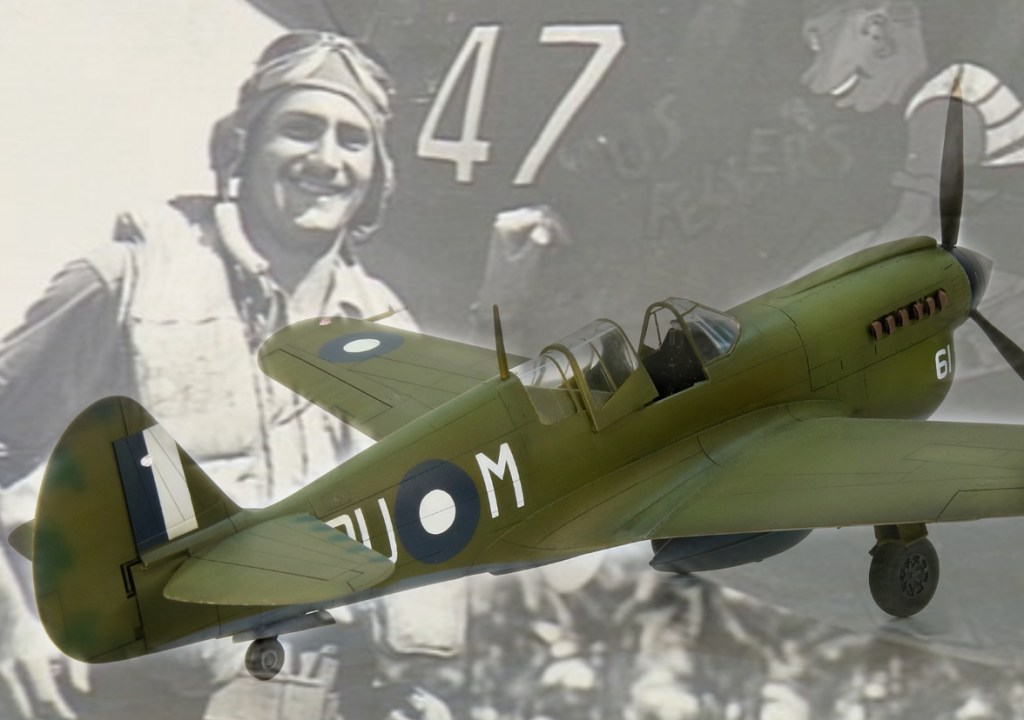

- Number 80 Squadron, RAAF
- Pilot Officer Eldred “Ted” Quinn
- Afterword
- Academy 1/48 Scale P-40E
- Gallery
- References and Sources
Number 80 Squadron, RAAF
Early Operations
After its formation in May 1943, the RAAF’s No. 80 Squadron was deployed to New Guinea, where it operated from forward airstrips such as Nadzab and Cape Gloucester. Its primary missions involved ground attack operations, providing close air support for Allied troops, and conducting air patrols. The squadron’s pilots quickly adapted to the rough conditions of jungle warfare, where rapid deployments and makeshift airstrips were common.

Throughout 1943 and 1944, No. 80 Squadron supported Australian and American forces as they pushed back Japanese forces across the region. Equipped with Curtis P-40E Kittyhawks their missions were primarily bombing and strafing fixed enemy positions, often operating under difficult conditions, including extreme heat, humidity, and frequent enemy attacks.
Dutch East Indies Campaign:
In 1944, No. 80 Squadron relocated to the Dutch East Indies (modern-day Indonesia) as part of the Allied strategy to recapture territories held by Japan. The squadron flew missions to support amphibious landings, disrupt enemy supply lines, and neutralise Japanese air and naval forces.

The Dutch East Indies campaign was marked by its intensity as Japanese forces fiercely defended key positions. The pilots of No. 80 Squadron regularly flew sorties against heavily defended targets contributing significantly to the success of the operations in this region.
However, by early 1945 the importance of the campaign was beginning to wane. The Squadron was regularly flying dangerous missions against an entrenched and tenacious enemy but elsewhere the war on Japan was clearly entering its final phase. Indeed, Operation Iceberg, the first attack on the Japanese homeland at Okinawa was just days away.
It was clear that attacking isolated Japanese positions had little impact on the overall war effort. These operations, often repetitive and risky, led to declining morale among the squadron’s pilots, who believed their skills and aircraft were being squandered. This sentiment was shared more broadly across the First Tactical Air Force, which primarily carried out these types of operations.
Mutiny
What became known as the “Morotai Mutiny” in 1945 involved a protest by several senior RAAF pilots who were frustrated by what they saw as the misuse of resources and personnel in futile and strategically insignificant operations. Among those protesting was Squadron Leader John Waddy of No. 80 Squadron, RAAF.

In April 1945, Waddy, along with seven other officers, submitted their resignations in protest, sparking a significant controversy within the RAAF command structure. The “mutiny” reflected deeper frustrations regarding the strategic direction of the air war in the Pacific, particularly as Allied forces began to shift focus towards more decisive operations like those planned in Borneo. Though the resignations were not accepted, the incident highlighted the significant strain and disillusionment felt by frontline airmen towards the end of the conflict
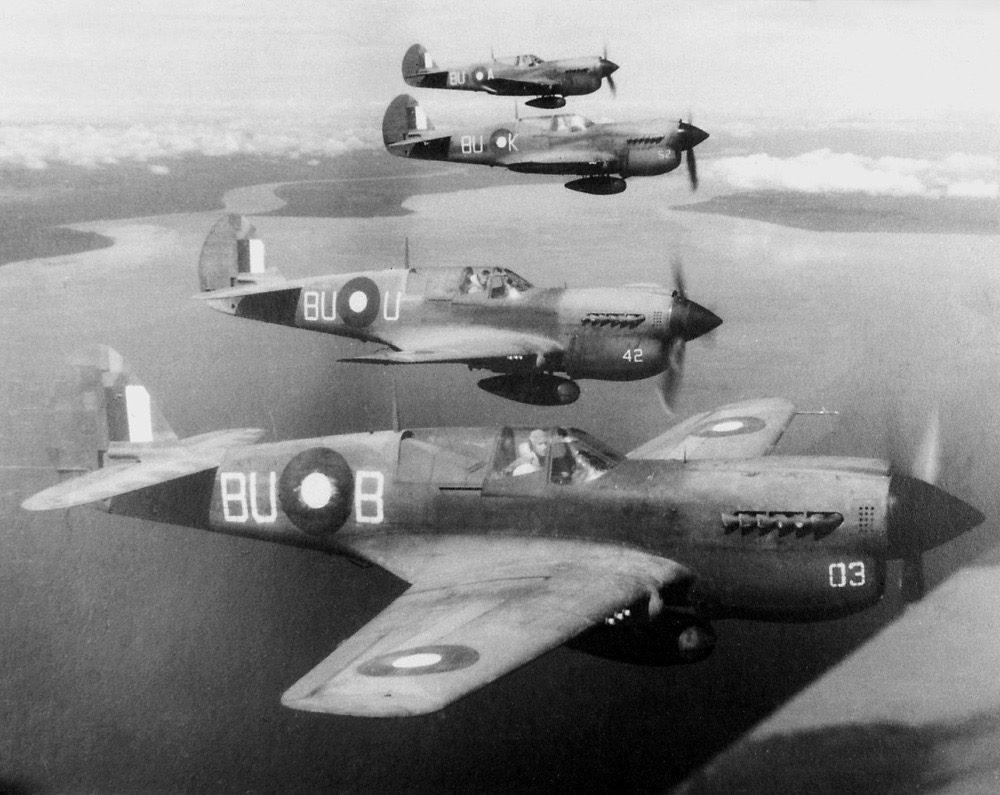
Final Operations in Borneo:
By mid-1945, No. 80 Squadron was involved in the Borneo campaign, specifically supporting the liberation of Balikpapan and surrounding areas. Initially operating from Morotai they moved closer to the front lines. the squadron still flew dangerous missions targeting Japanese fortifications, infrastructure, and troop concentrations though it was clear the war was now solely focused on the Japanese islands themselves.
Pilot Officer Eldred “Ted” Quinn
Eldred “Ted” Quinn was born to Albert and Evelyn Quinn in Gumeracha, SA on 17th September 1922. He went to Forreston Primary School and after leaving Birdwood High School became a farmer.
On ANZAC Day 1942 Quinn enlisted in the RAAF at No 5 Recruit Training Centre, Adelaide. He completed his initial training at Victor Harbor and Parafield in SA. In 1943 he was posted to 11 Elementary Flying Training School before advancing to No 7 Service Flying Training School at Deniliquin, receiving his wings on 28 June 1944. Ted completed fighter conversion training on Kittyhawk aircraft during August and September of the same year at No 8 Operational Training Unit.

Ted was posted to No 80 Squadron in November 1944. By late January 1945 he, along with his squadron was flying in support of the offensive in the Dutch East Indies. Operating from Morotai, Quinn and his squadron flew close support missions for the Army.
On 15 February 1945, Quinn was uninjured when the port tyre of Kittyhawk A29-681 blew out on take off from Wama airstrip, Morotai Island, causing significant damage to the aircraft. Having been appointed Temporary Flight Sergeant on 1 January, he was recommended for commissioning in July 1945.
Last Sortie
Thanks Greg Weller at https://www.saam.org.au/aviator_profiles/SAAM%20Biography%20-%20QUINN%20Eldred%20(Ted).pdf for the detailed description of the 9 August mission in which Ted was killed.
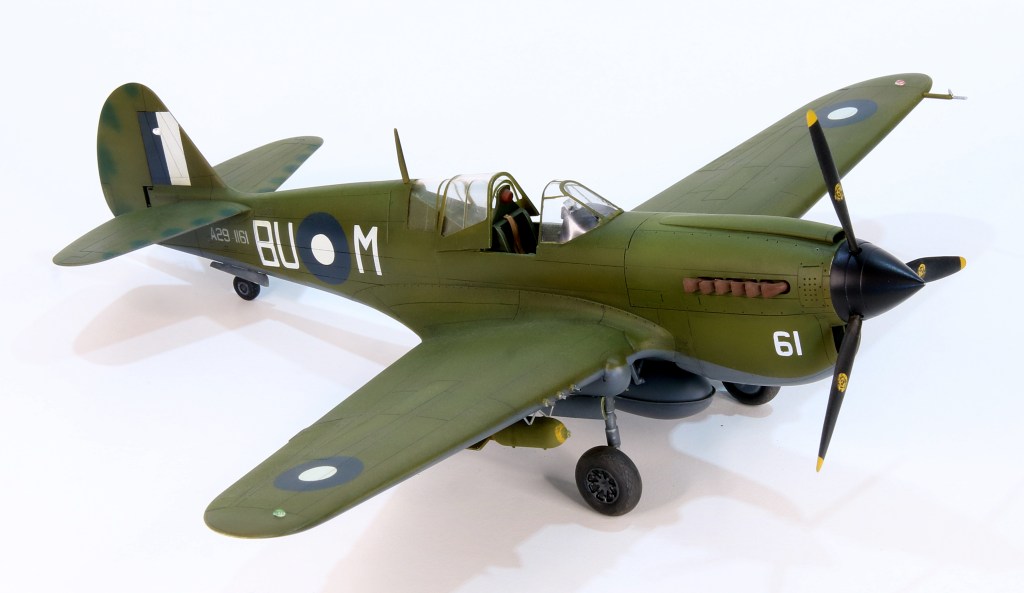
On 9 August 1945 Ted took part in an attack on Japanese forces in eastern Borneo just north of Balikpapan. This was to be his final mission as he had just completed his operational tour at 80 Squadron. Ted was not flying his usual aircraft (BUoX A29-1163) and was instead flying BUoM s/n A29-1161. Upon arrival at the target, the eight aircraft attacked individually in line-astern formation, diving from 6,000 feet, releasing bombs at 2,500 feet and pulling out at 2,000 feet, at a speed of 350 mph.
The Kittyhawks were loaded with one 500lb demolition bomb armed with an instantaneous fuse. A total of 14 bombs landed on the target area, with four near misses. Three buildings were demolished and another three were wrecked by the strike.
The aircraft then carried out strafing runs on targets of opportunity around the town of Anggana, encountering ground fire of varying accuracy and intensity from various emplacements. A Japanese motor transport building was camouflaged and hard to identify but they destroyed six trucks and four vehicles during the attack. They then turned their attention to an oil-cracking plant, located just behind the garage, which was not camouflaged.
During the attack, the mission commander’s aircraft had part of the port elevator shot away by ground fire. Ted was not so fortunate. His aircraft was hit behind the rear engine cowling at about 1,500ft as he commenced his strafing run. Despite flames coming from the engine cowling along the underside of Quinn’s aircraft as he continued his attack. He levelled out and turned to port but could not gain height and belly landed. His aircraft skidded along the ground into the oil pumping plant where both the aircraft and the installation exploded and burnt fiercely. There was no chance for him to escape.
The next day 80 SQN heard about the dropping of the atomic bombs on Hiroshima and Nagasaki. On 15 August 1945, one week after Quinn’s last mission, Japan surrendered. Quinn was the last RAAF pilot to be killed in combat during WWII in the last offensive mission carried out by 80 SQN during the war. He was posthumously promoted to Pilot Officer in October 1945.
Afterword
It’s a strange coincidence that both the last Canadian and Australian pilots killed in the Second World War died on 9th August. Canadian “Andy” Anderson was killed attacking the Home Islands in preparation for the anticipated invasion of Japan, “Ted” Quinn was killed 4,800km away in Indonesia.
Both died after Japan had been effectively defeated, at least in the usual military definition. Hiroshima was already a nuclear wasteland and Nagasaki was about to join it, though the latter’s fate wasn’t known to anyone at the front lines at the time. The Japanese air forces had been saving their aircraft for the final defence of the homelands while their cities were being devastated by the armada of B-29s the USAAF sent daily.
So, why?
One can understand the need to continue pressing the Japanese on their home soil, the ground invasion was expected to be murderously bloody – some estimates put expected Allied casualties at one million. The more that could be done to disable Japan’s ability to withstand the invasion the more lives might be saved.
The understandable need for secrecy about the atomic bombs excuses the front line commanders’ and mission planners’ continued attacks on Japanese infrastructure and military assets.
But does that same understanding carry over to the Dutch East Indies theatre? When the war was clearly over in the region, when the local Japanese forces had zero offensive capability, surely it was obvious to the theatre Senior Command that there was no military need for continued attacks such as No.80 Squadron’s 9th August mission? Even if they had no inkling of the atomic bombs – they did though, Hiroshima had already been attacked – why continue to risk their mens’ lives in arguably militarily pointless attacks?
In the end, the “Morotai Mutiny” seemed to have made no difference.
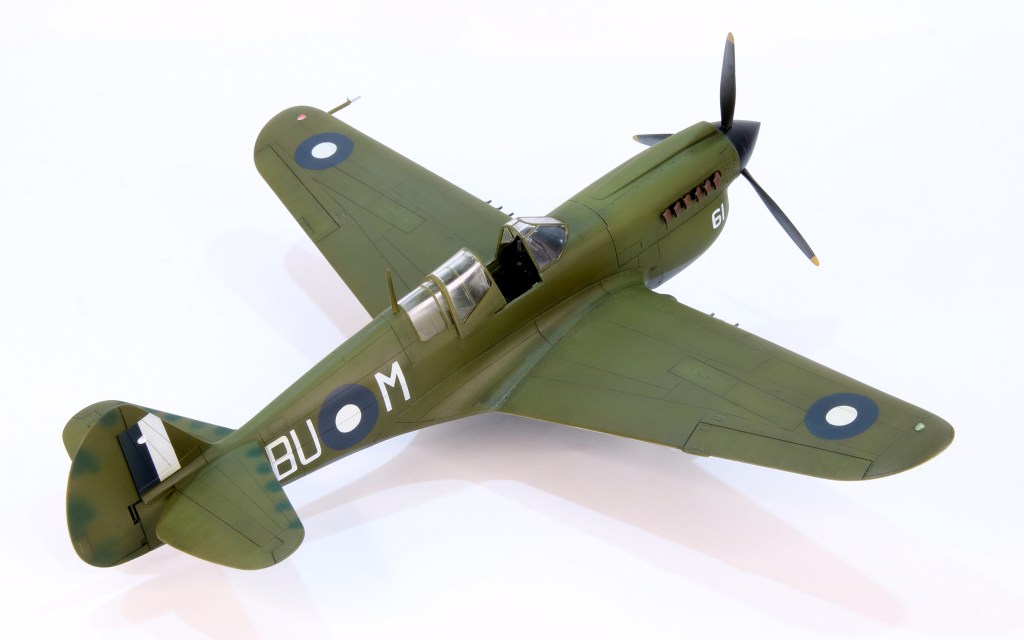
Academy 1/48 Scale P-40E
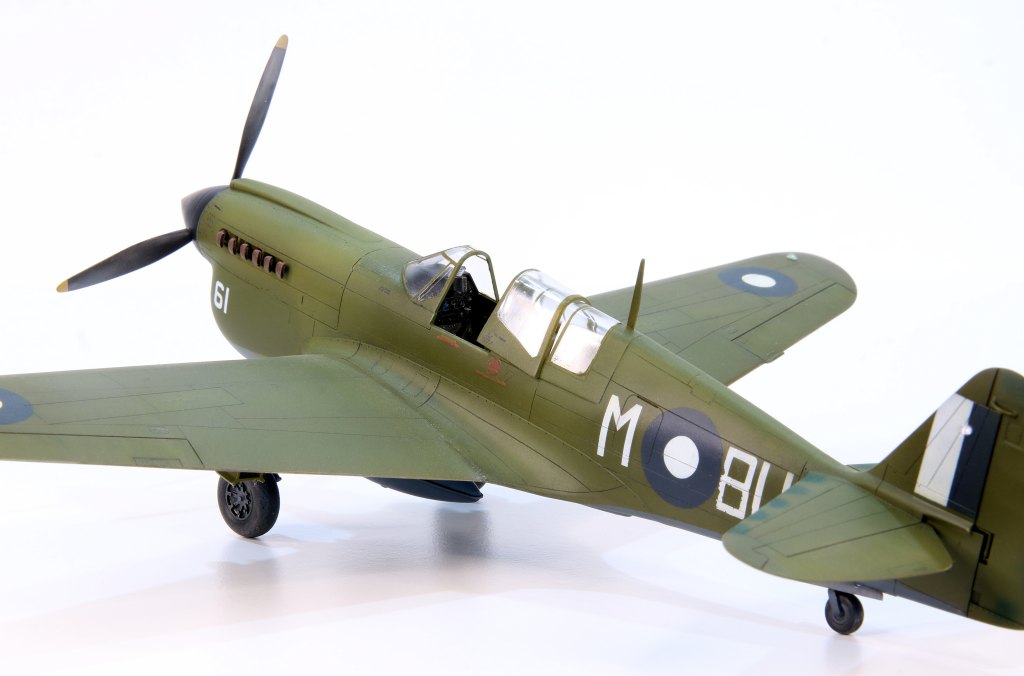
Academy’s P-40E is an uncomplicated kit, well priced and reasonably easy to obtain.
My copy included decals for an RAAF subject as well as the default USAAF subjects.

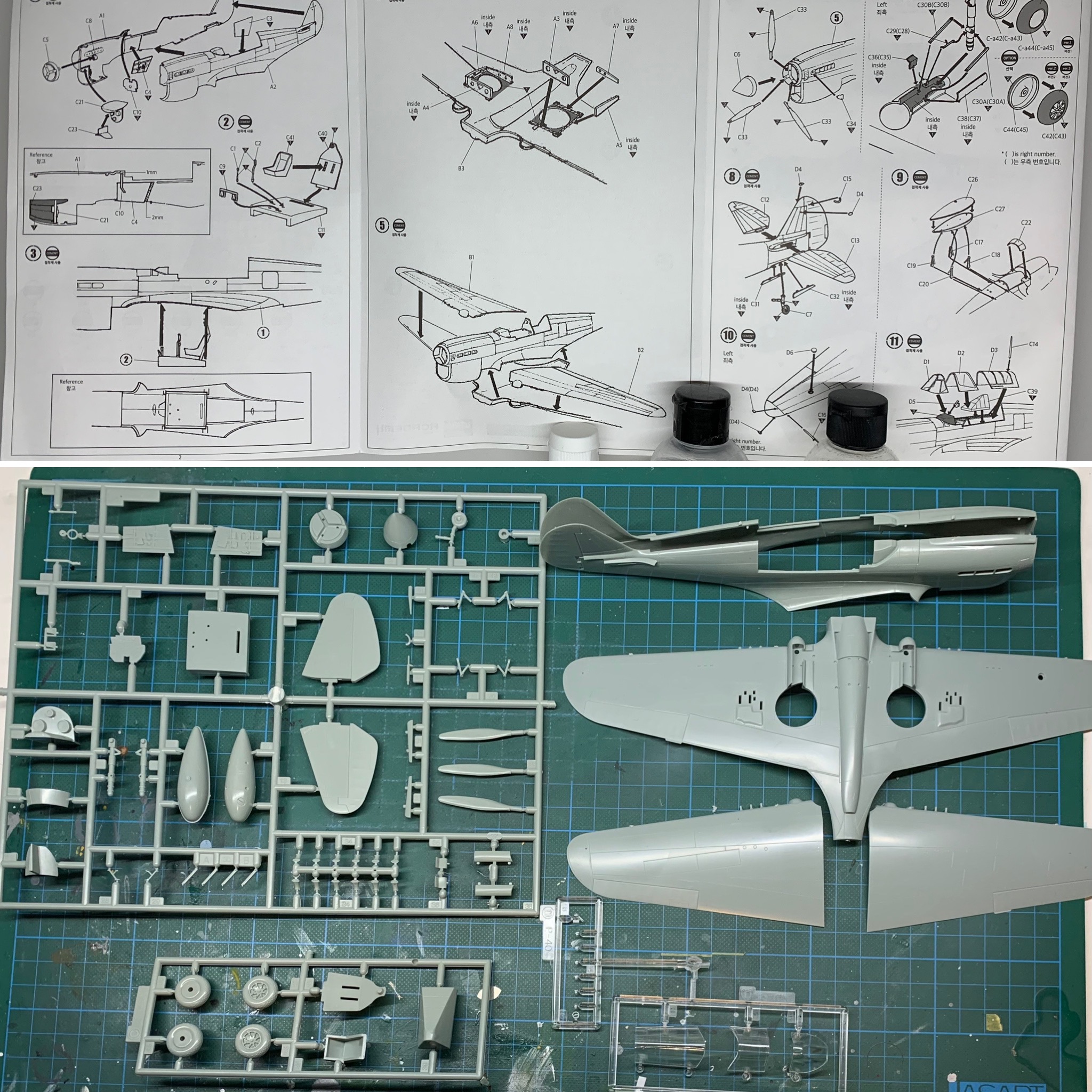
Build
The assembly begins with the cockpit and subsequent steps were simple and intuitive. Fit was excellent and had I not messed up attaching one of the horizontal stabilisers I would not have used any filler at all,
Click on any of the images below to scroll through the gallery.
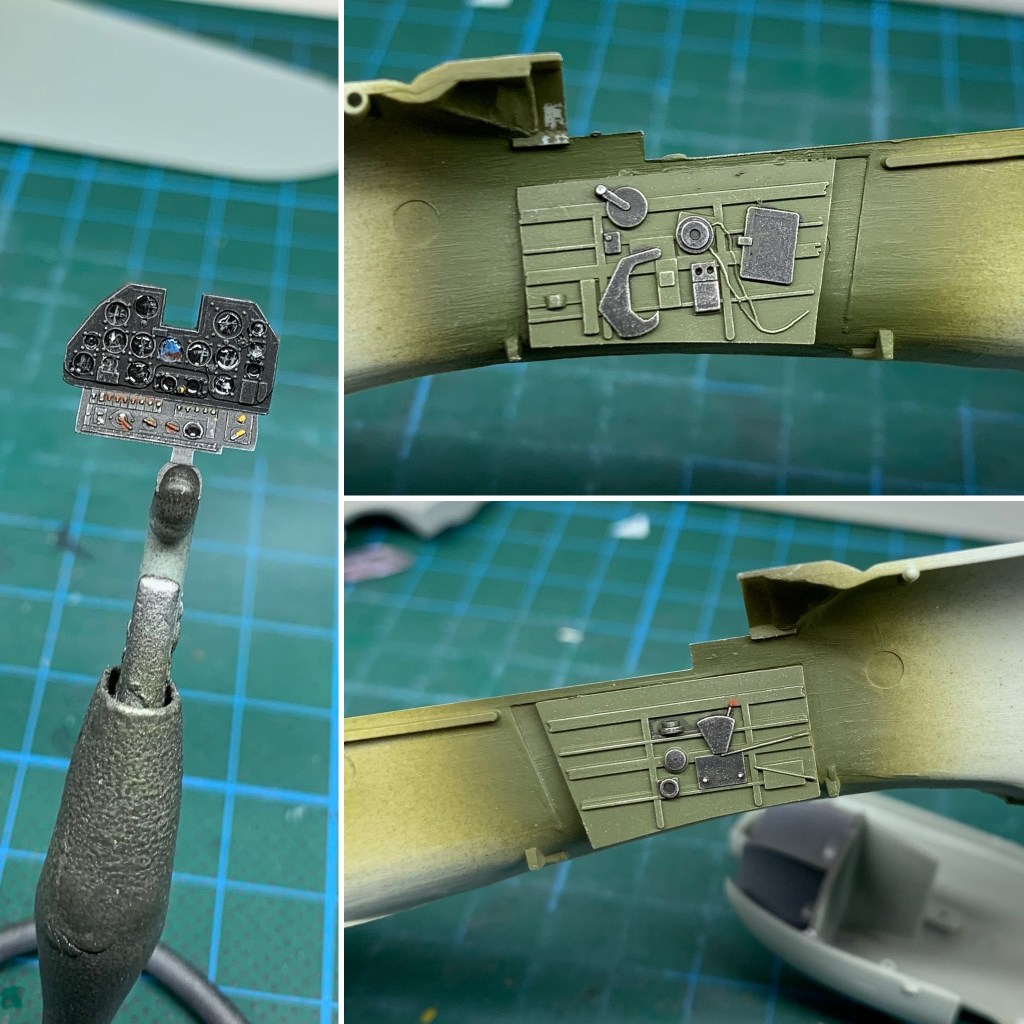

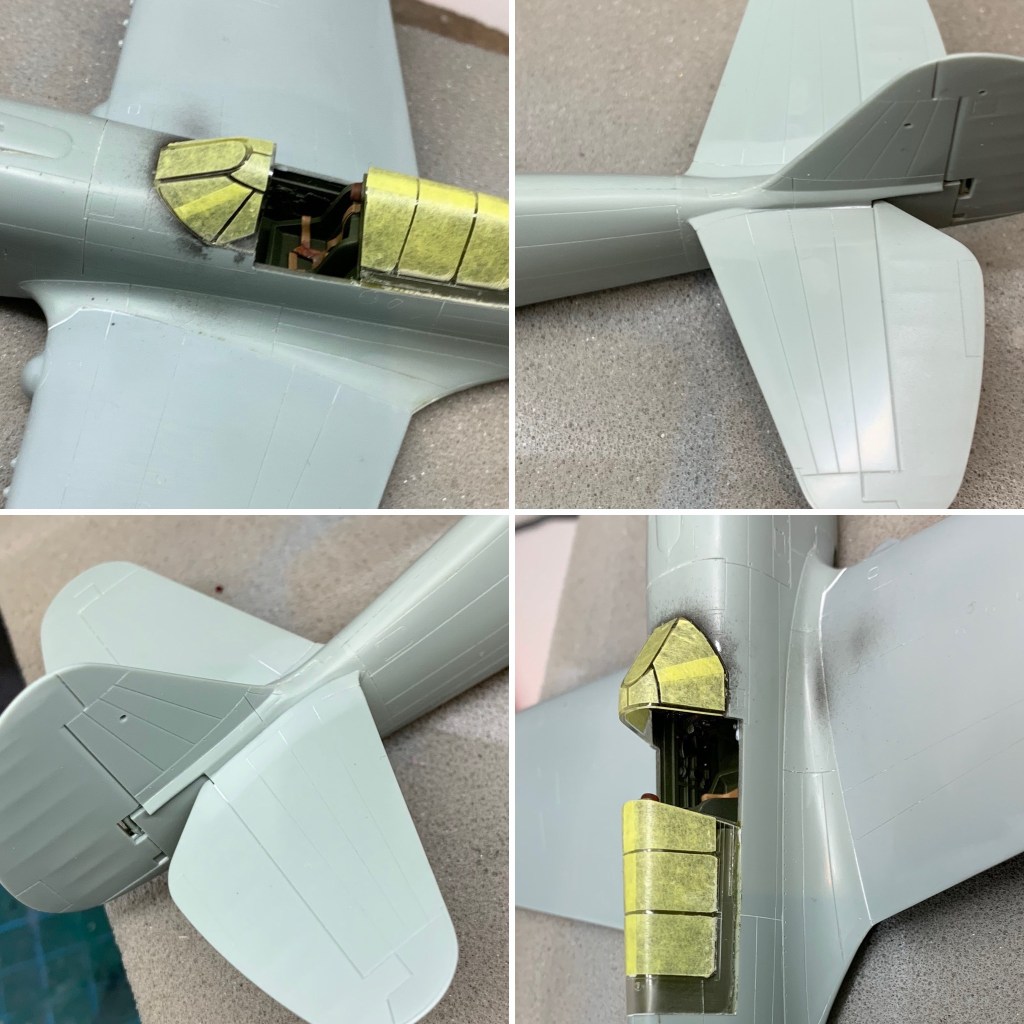
Coming as it did, between builds of an Eduard P-51 and a Tamiya P-38, this one was a supremely simple assembly taking all of an hour or so of bench time (plus cockpit painting) to bring ready for paint. The fit was excellent, at least the equal of Tamiya’s; had such a simple paint scheme not obviated the need, I could have painted the airframe after final assembly
Paint
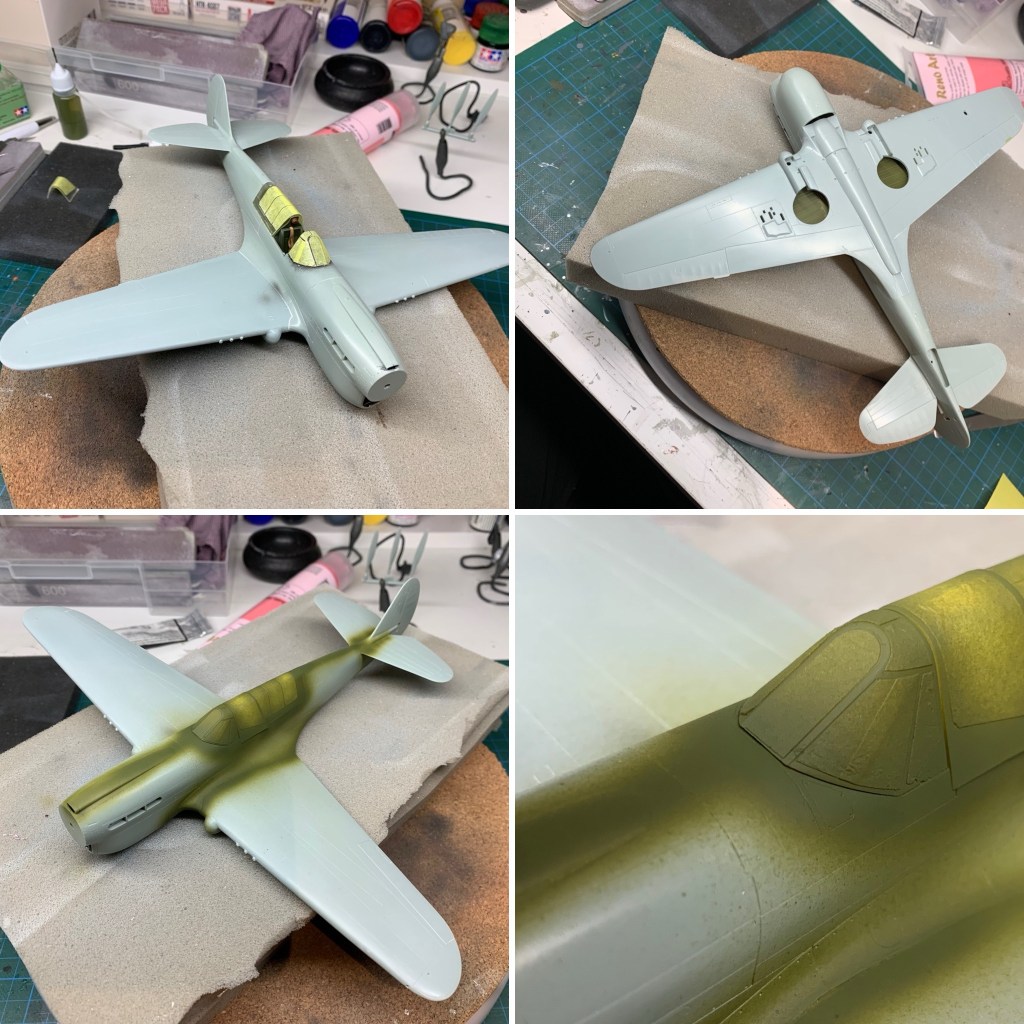
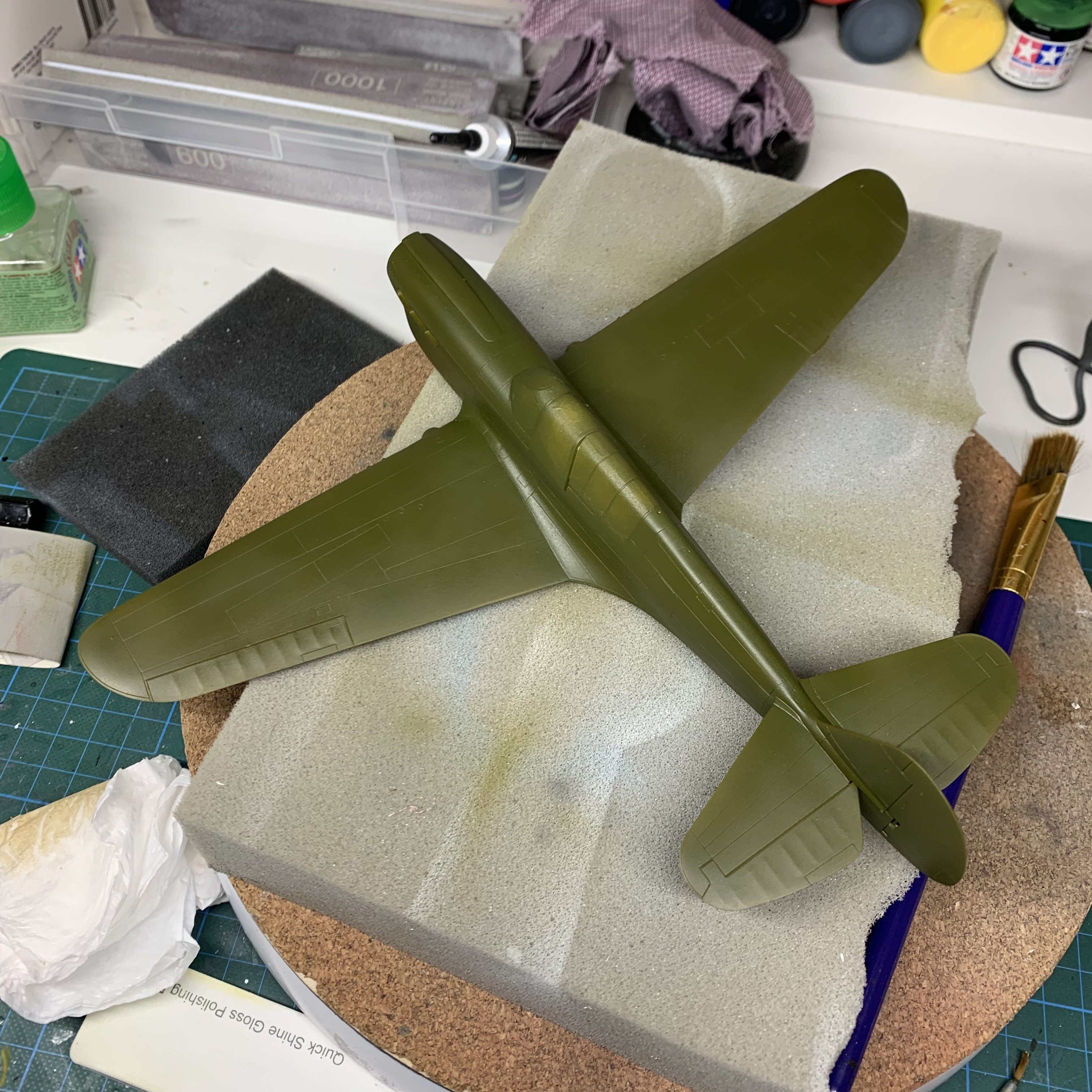
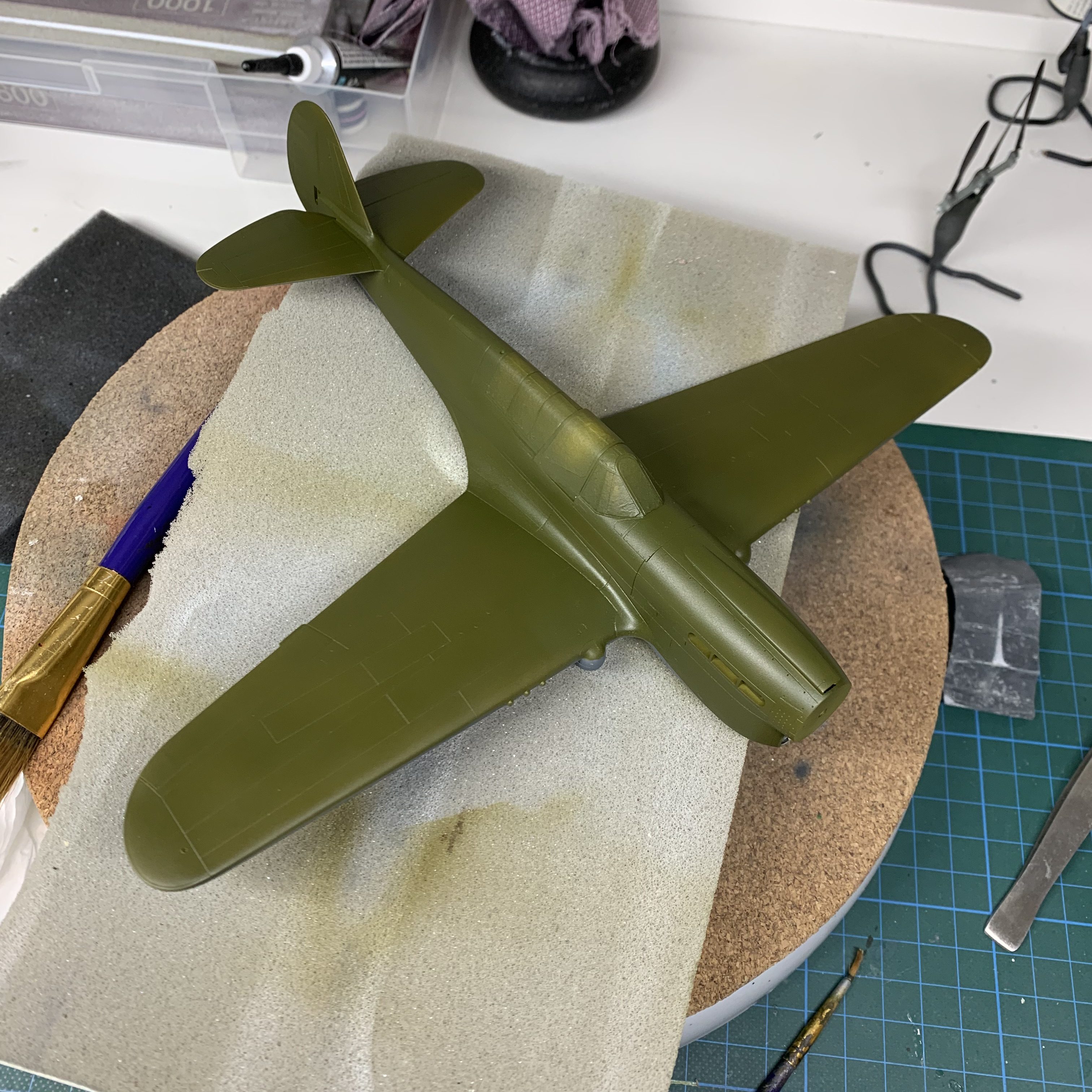
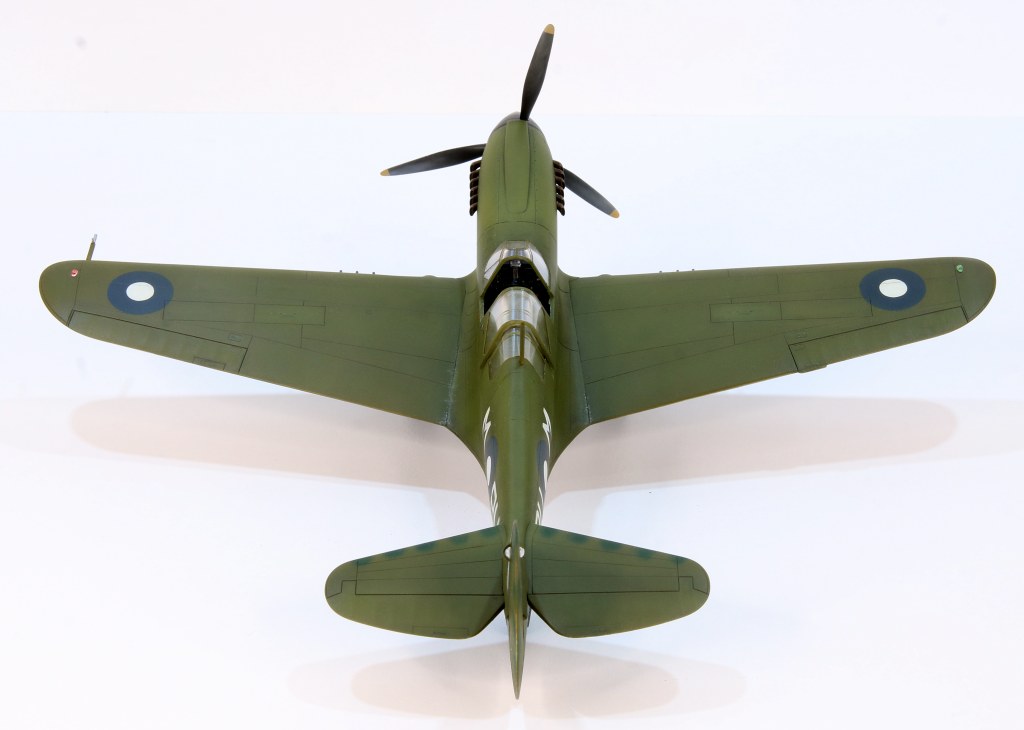
The scheme for No. 80 Squadron’s P-40’s was indeed simple, green over grey. These were US-painted airframes so the colours were Olive Green over Neutral Grey. Monochromatic schemes can be challenging to breath life into but these particular aircraft operated in relatively harsh conditions so I had a little more leeway within which to work.
I started with a pre-shade and then applied the base colours. I added texture with varied hues of the base colour and world a bit of fade into the green as contemporary photos show some variation in the green’s density.
There would be more work to do on the paintwork as part of weathering, but as a base paint job I was happy with it.
Click on any of the images below to scroll through the gallery.


Markings
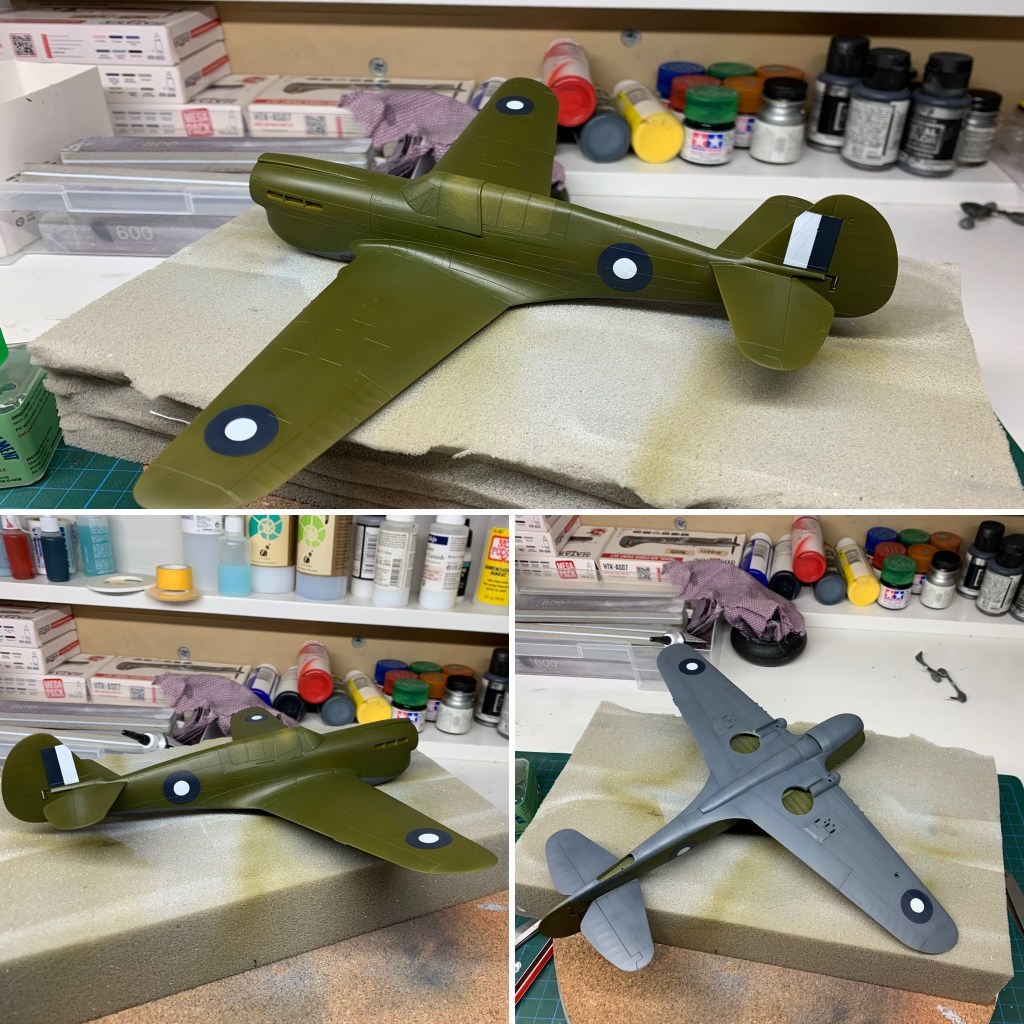
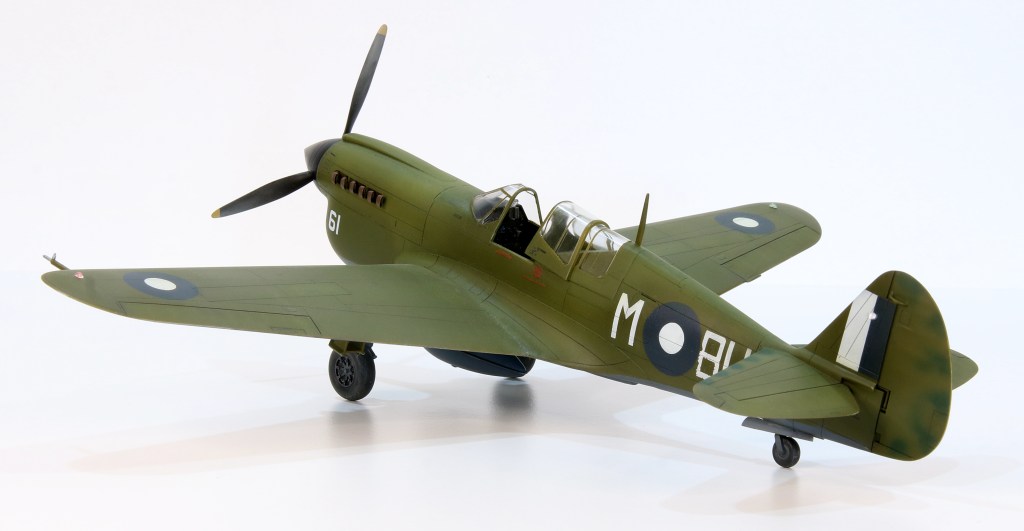
Most of the markings were simple. RAAF blue and white roundels, the white squadron and aircraft code and a few stencils made up the bulk of the markings.
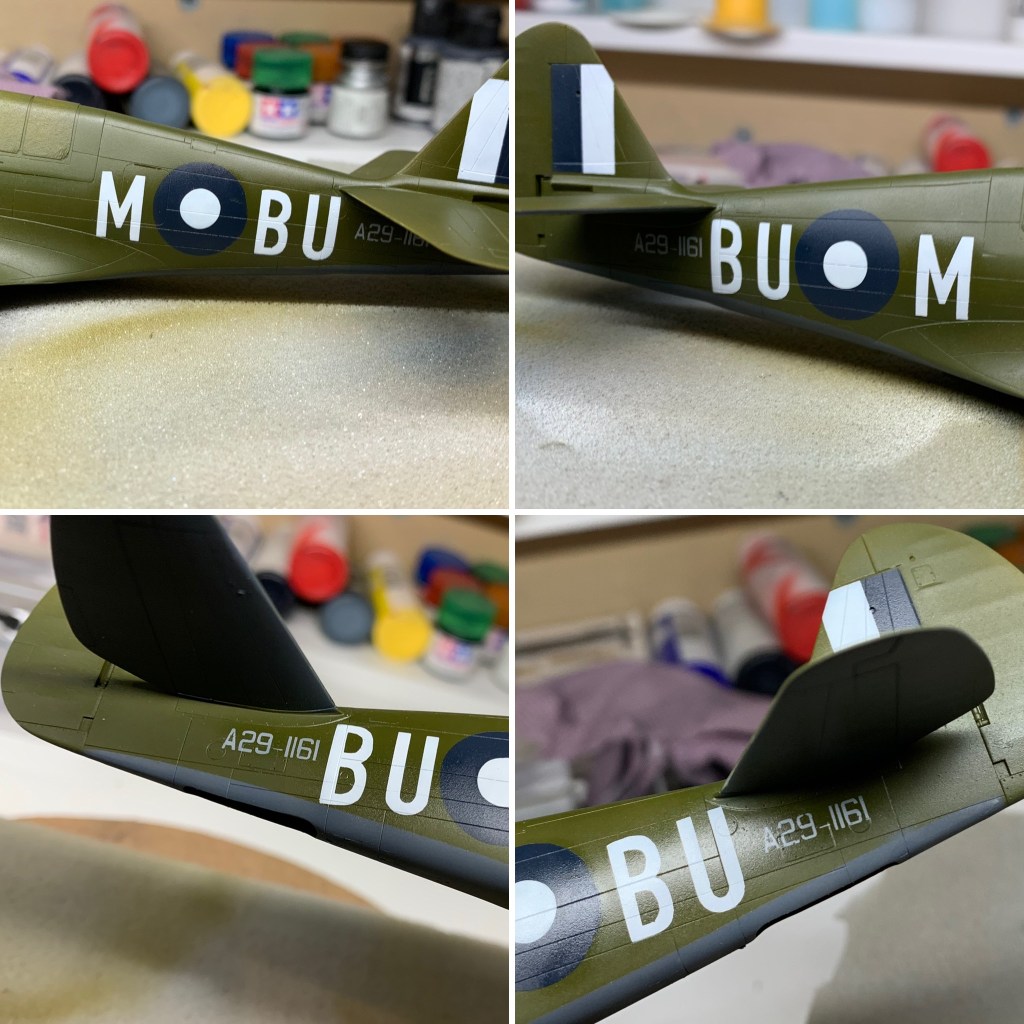
If I’d only looked closely at the contemporary photos I would have noticed that when I copied the decal sheet’s font for the codes I made a classic error of assumption; the codes on 80 Squadron’s aircraft were different.
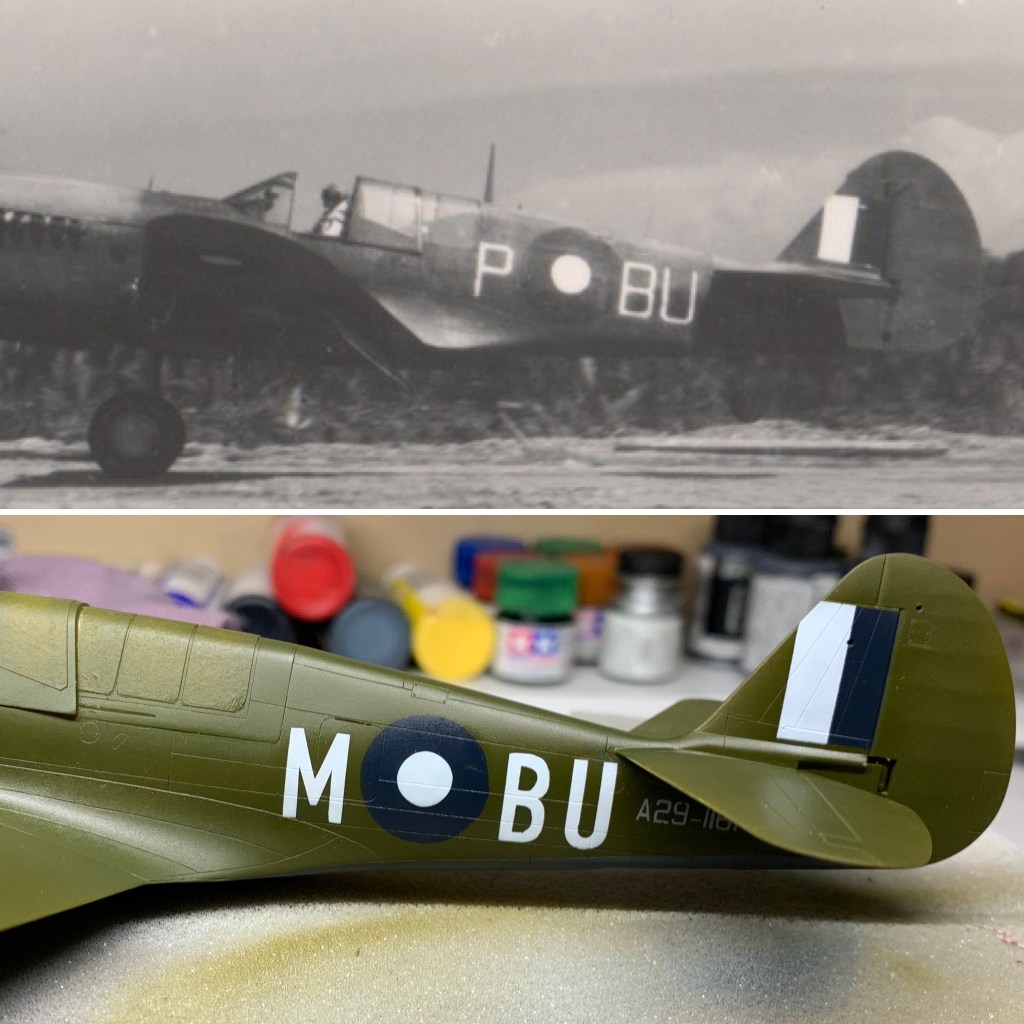
A quick redo lead to this…
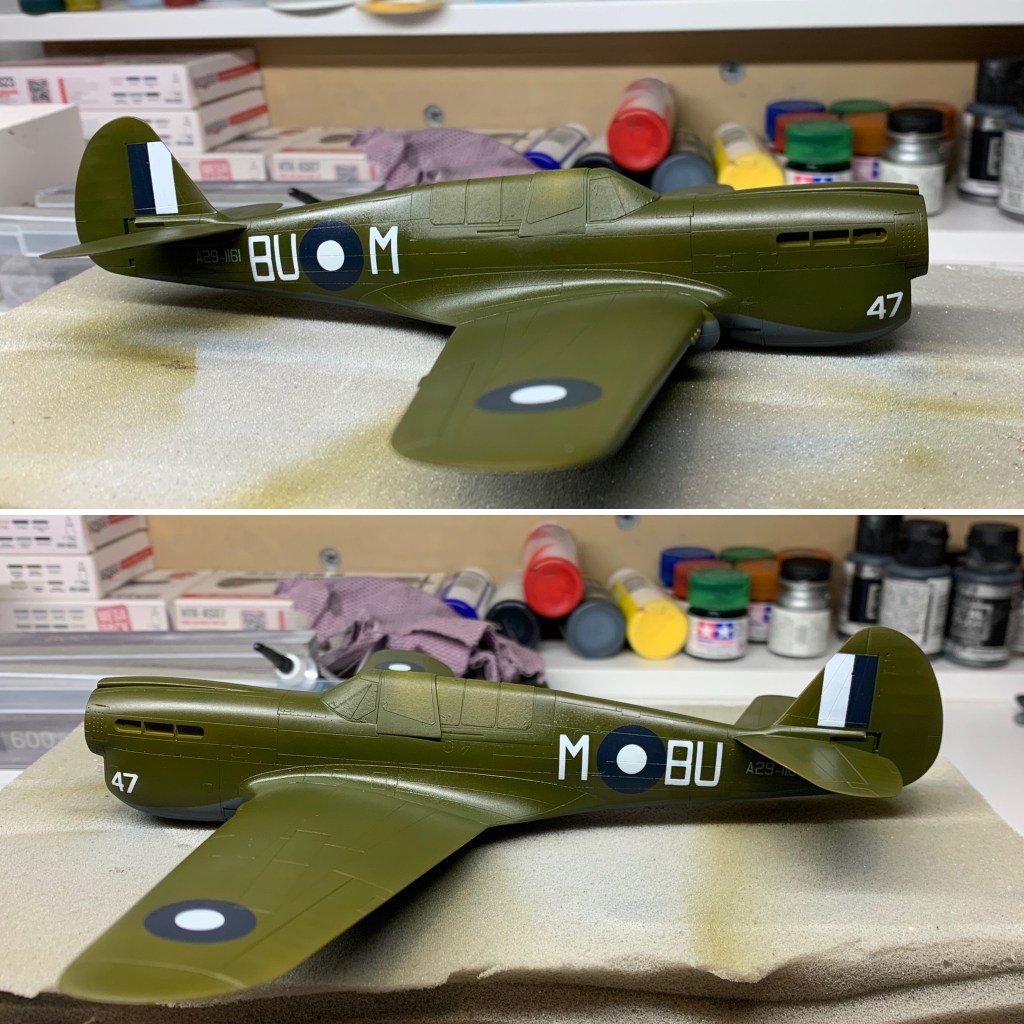

Happy now with the markings, it was time to tackle the main challenge, the nose art.
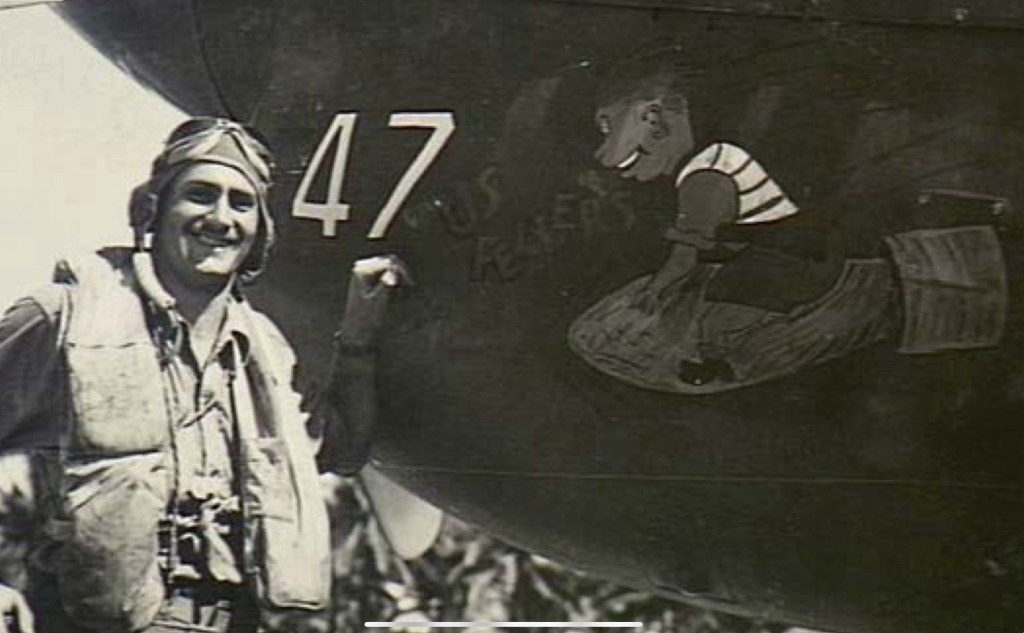
My first thought was to make a mask and paint the base colours with my airbrush, filling in the detail by hand. After some experimentation, I was unable to achieve results I was satisfied with and instead had to order some custom decals. I spent some considerable time on the art work before sending them off to an Australian-based custom decal supplier.
After a relatively short wait, the decals arrived and to be honest, I was quite disappointed with the results. The colour density was poor and the decals themselves were extremely difficult to handle and apply. I needed to hand paint a lot of detail to get an acceptable result. In the end I was reasonably happy with how it turned out but I’ll not be using that company again.
Click on any of the images below to scroll through the gallery.
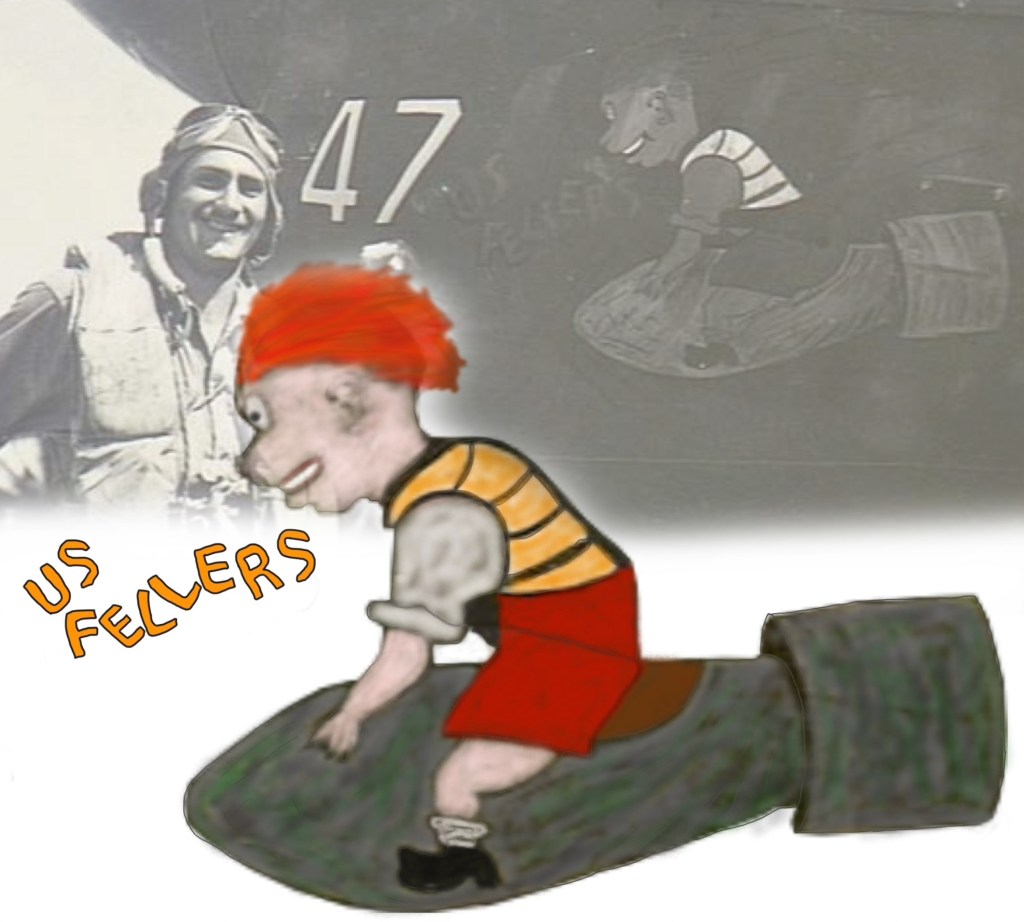
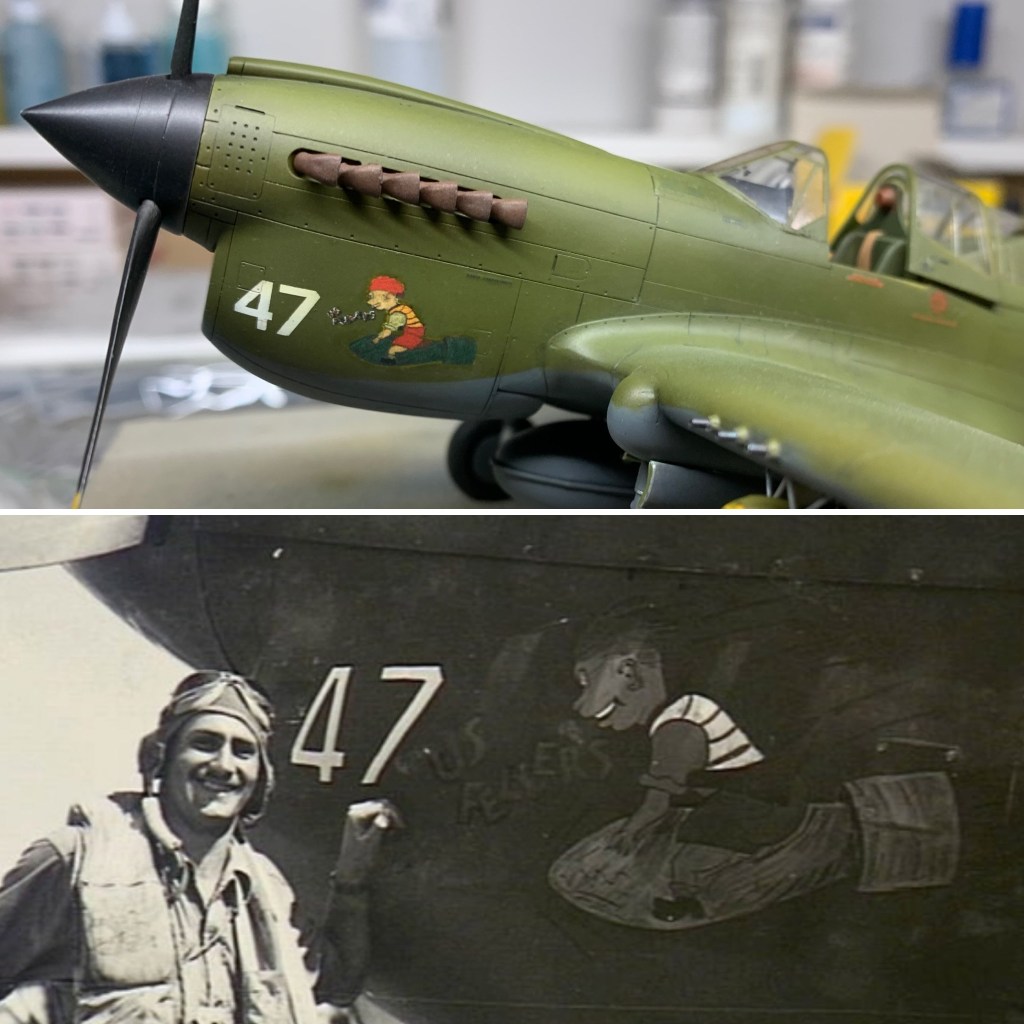
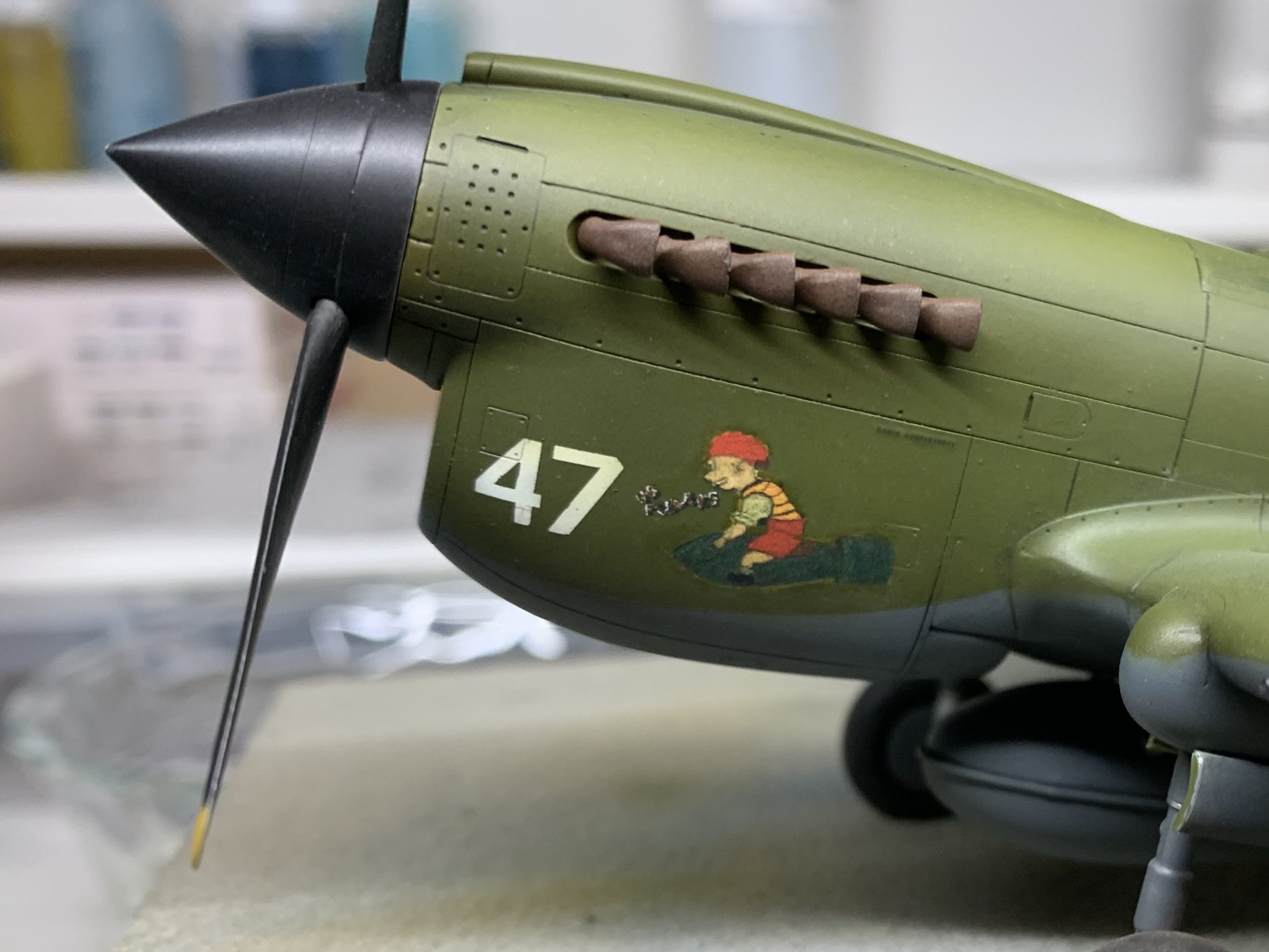
With the nose art done and the markings complete I moved on to weathering and final assembly.
Weathering and Finish
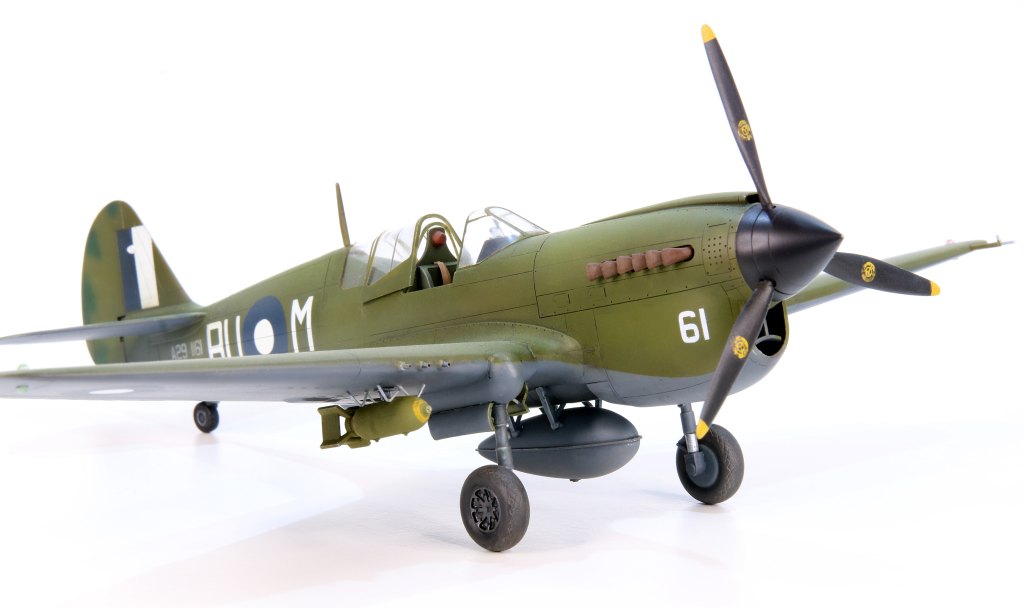
The undercarriage, bomb load and other bits and pieces were applied without complication. I made the bomb pylons from wire as a simplified representation of the RAAF bomb carriers. They’re not very accurate but capture the look if not the detail.
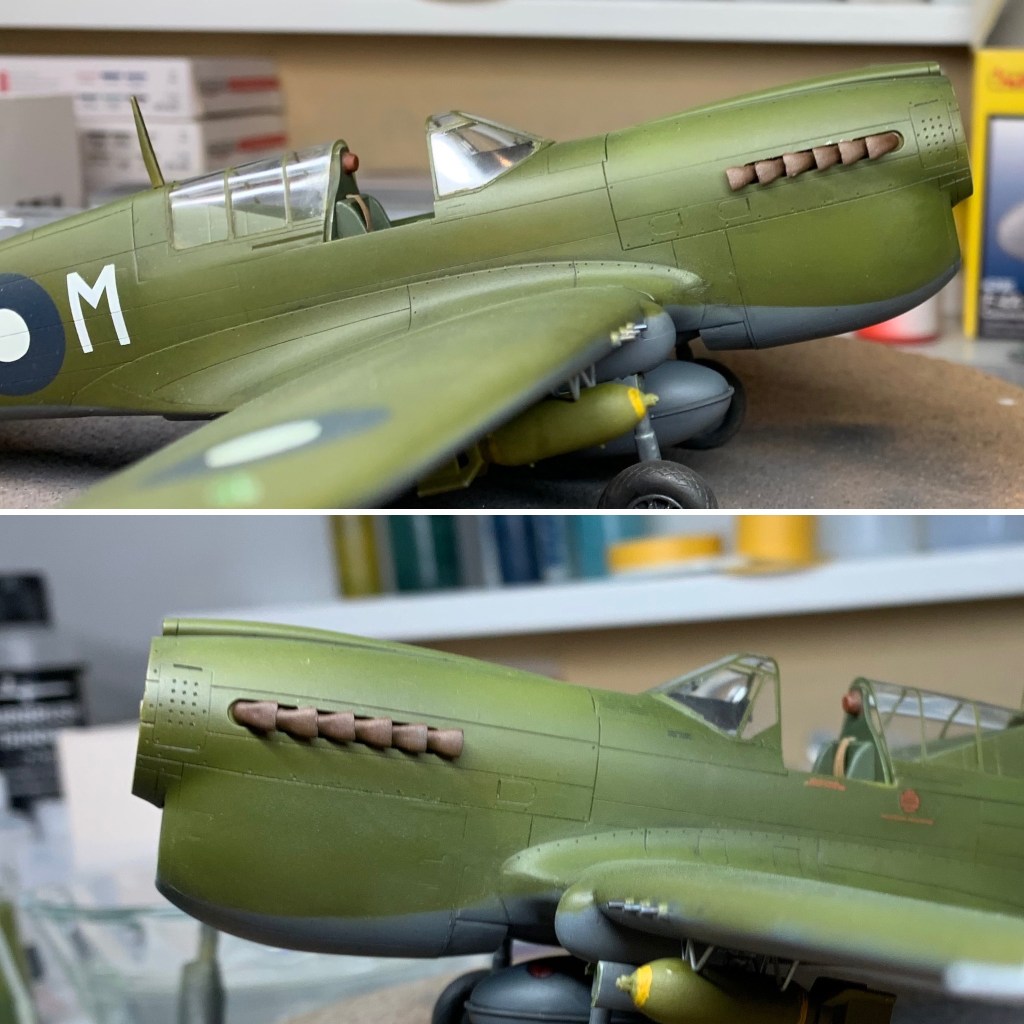
I also worked on the overall paint finish; in studying the photos I saw a lot of fading on the paint, particularly around the upper engine cowling. I worked a filter on that area in particular to get the kind of faded look I saw in the photos. I think it’s okay as I left it, but not my best work for sure.
Click on any of the images below to scroll through the gallery.
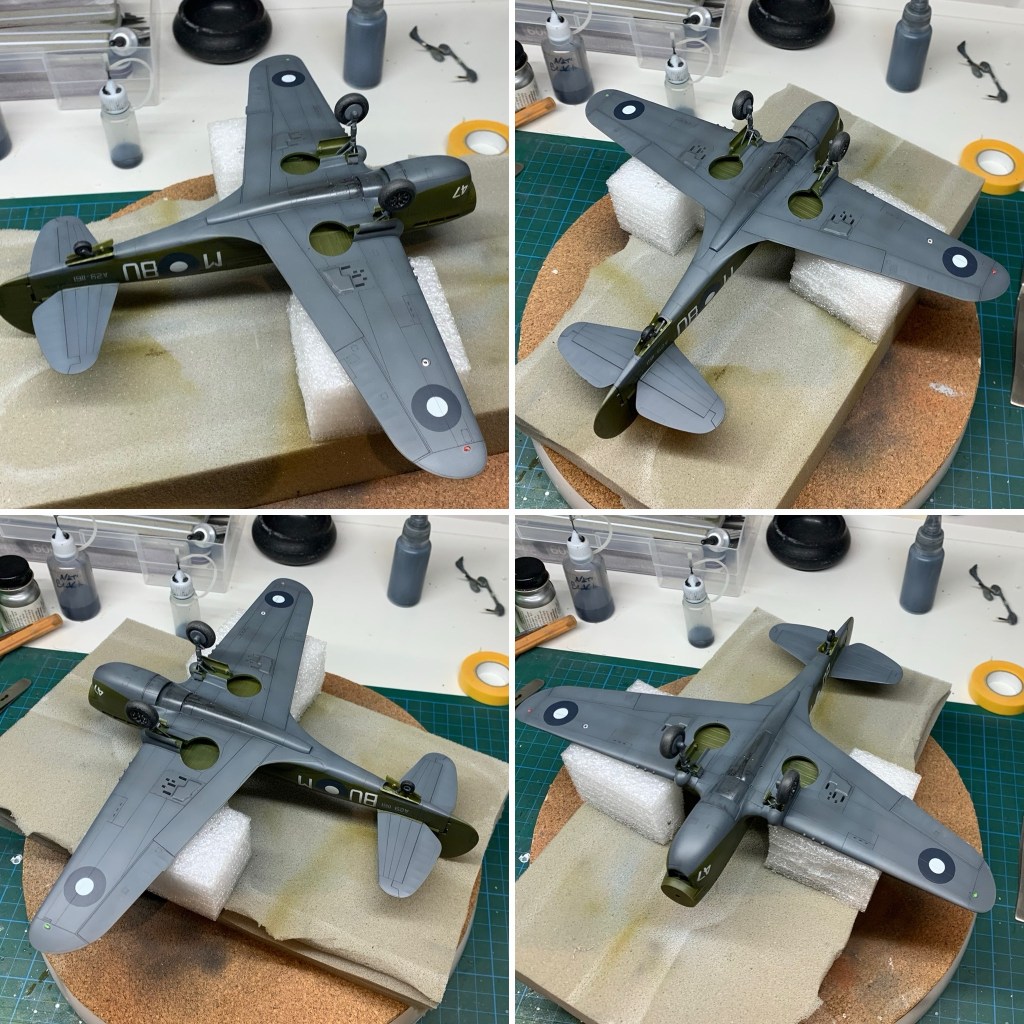
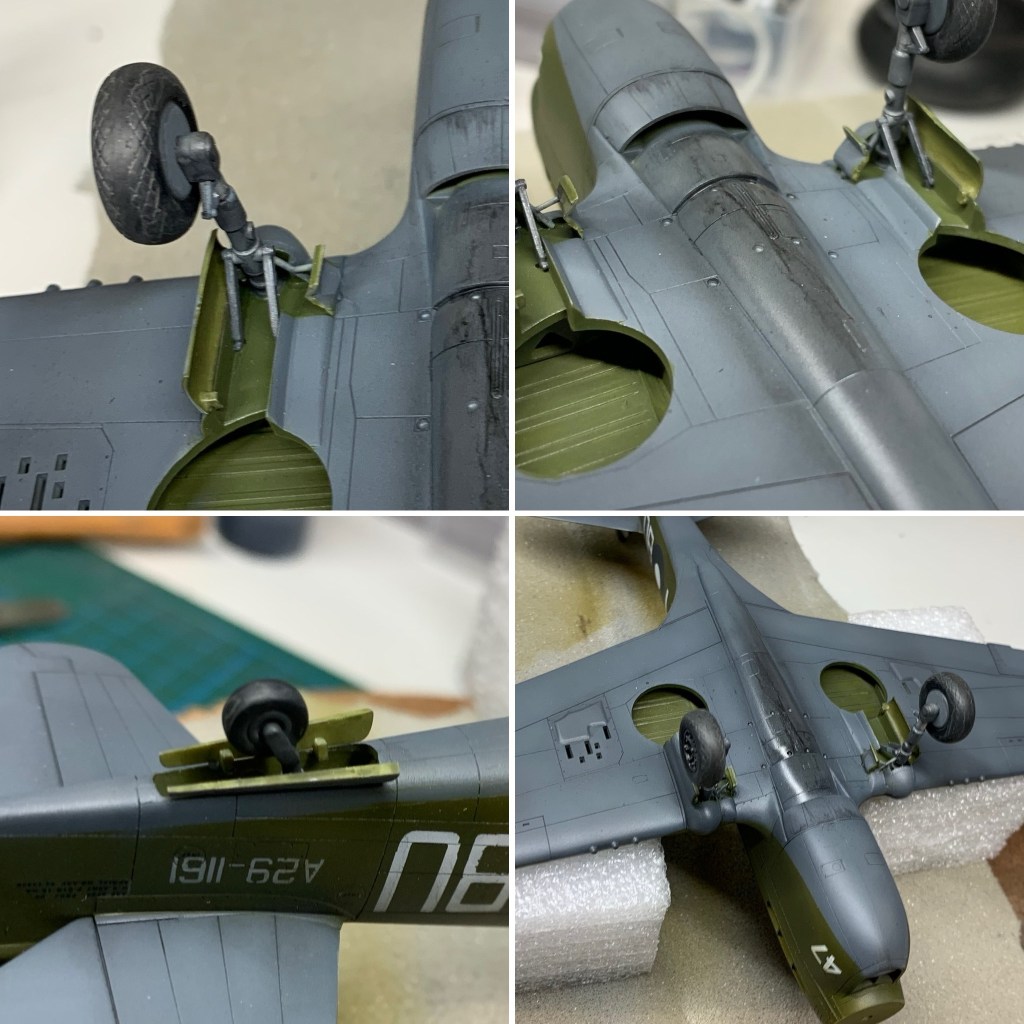


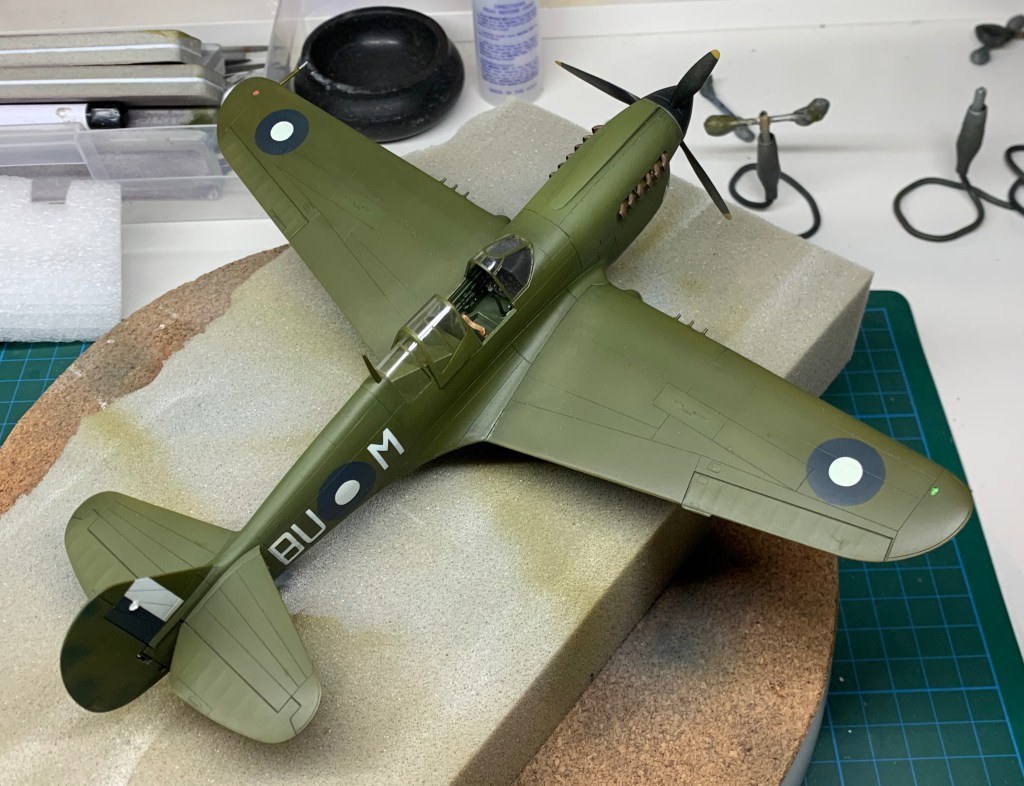
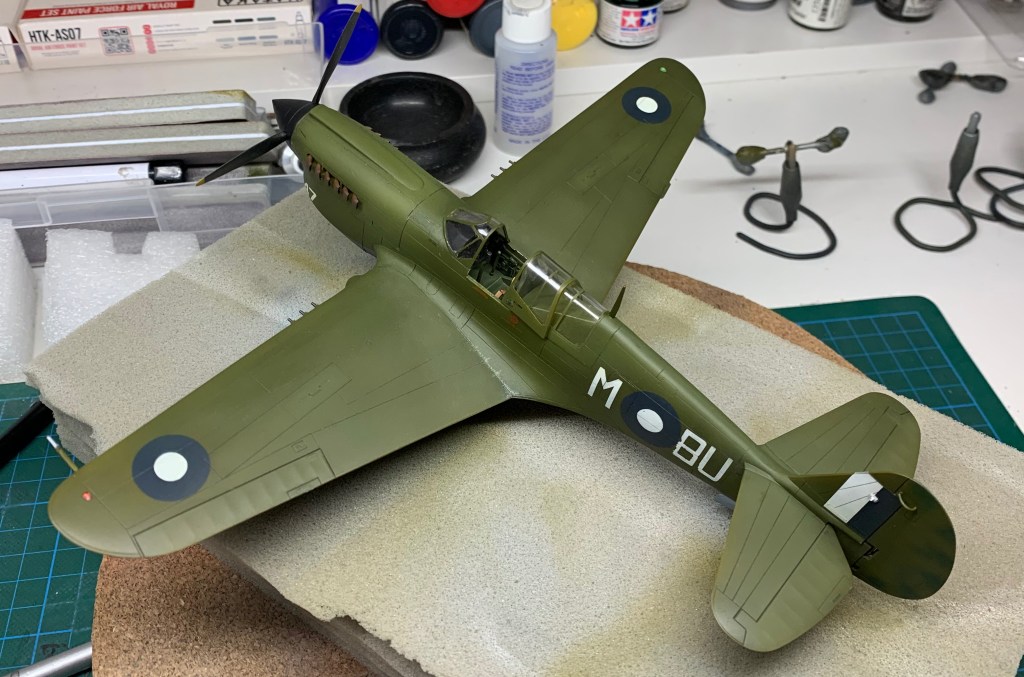
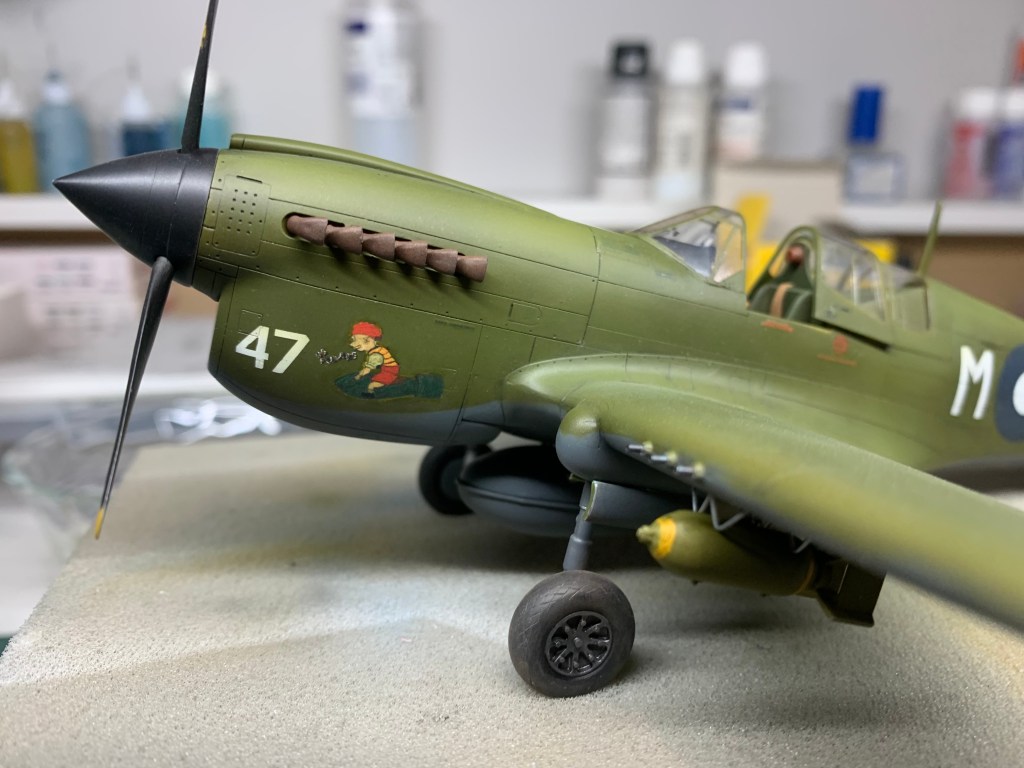
And that was a wrap. Until a posting on Britmodeller elicited a comment for a forum user that told me I’d not built Ted Quinn’s P-40 at all, I’d built his Squadron Leader’s…
Finished Again
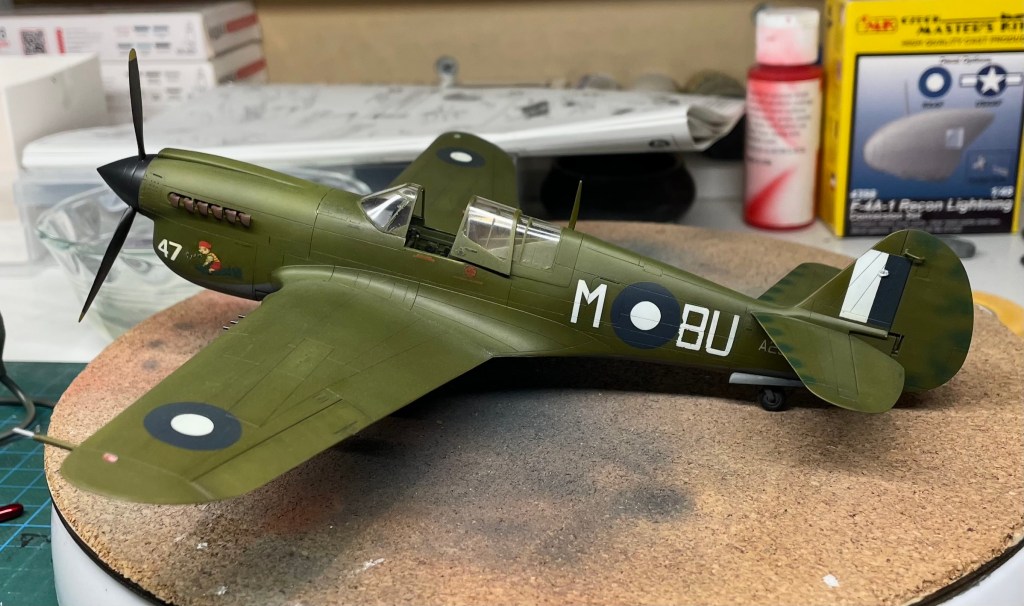
My final assumption came back to bite me. Although Ted was photographed in front of #47 “Us Fellers” he didn’t actually fly it, and it certainly wasn’t the aircraft he lost his life in.
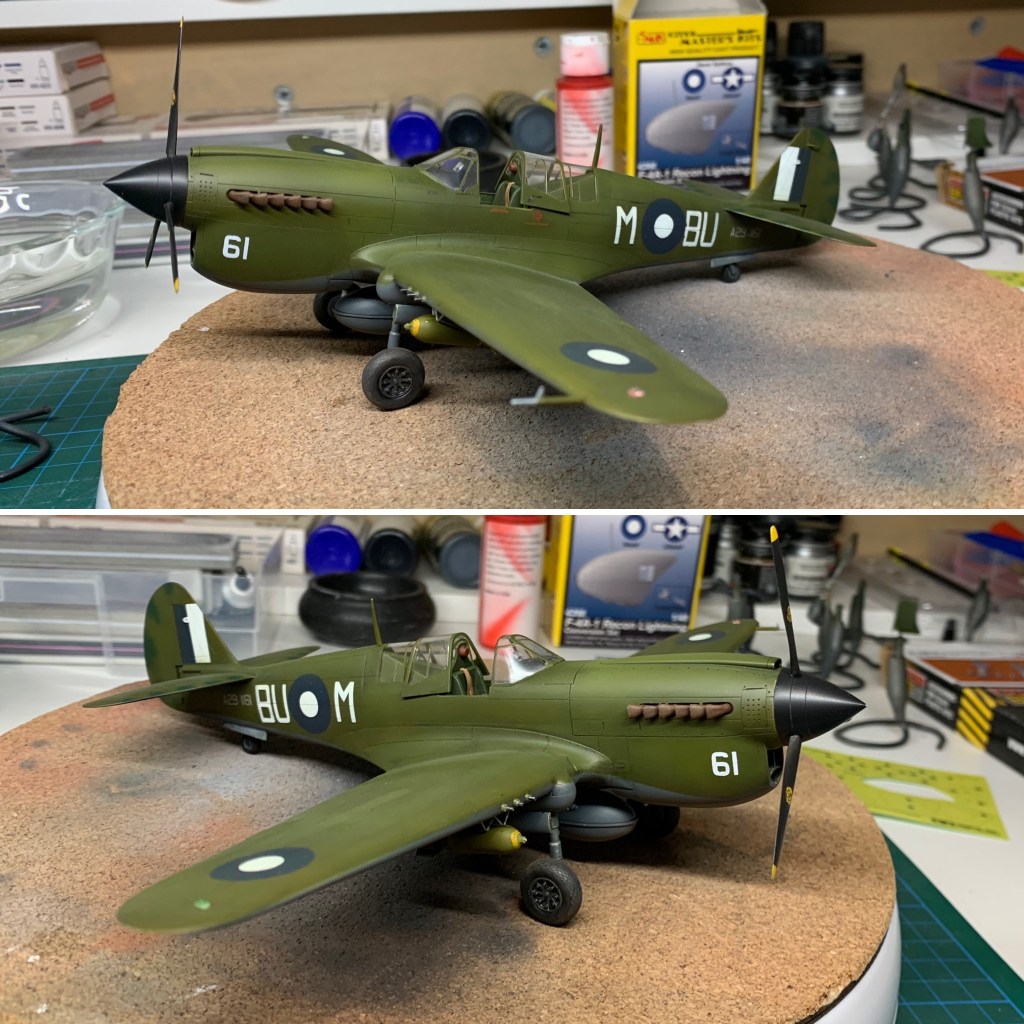
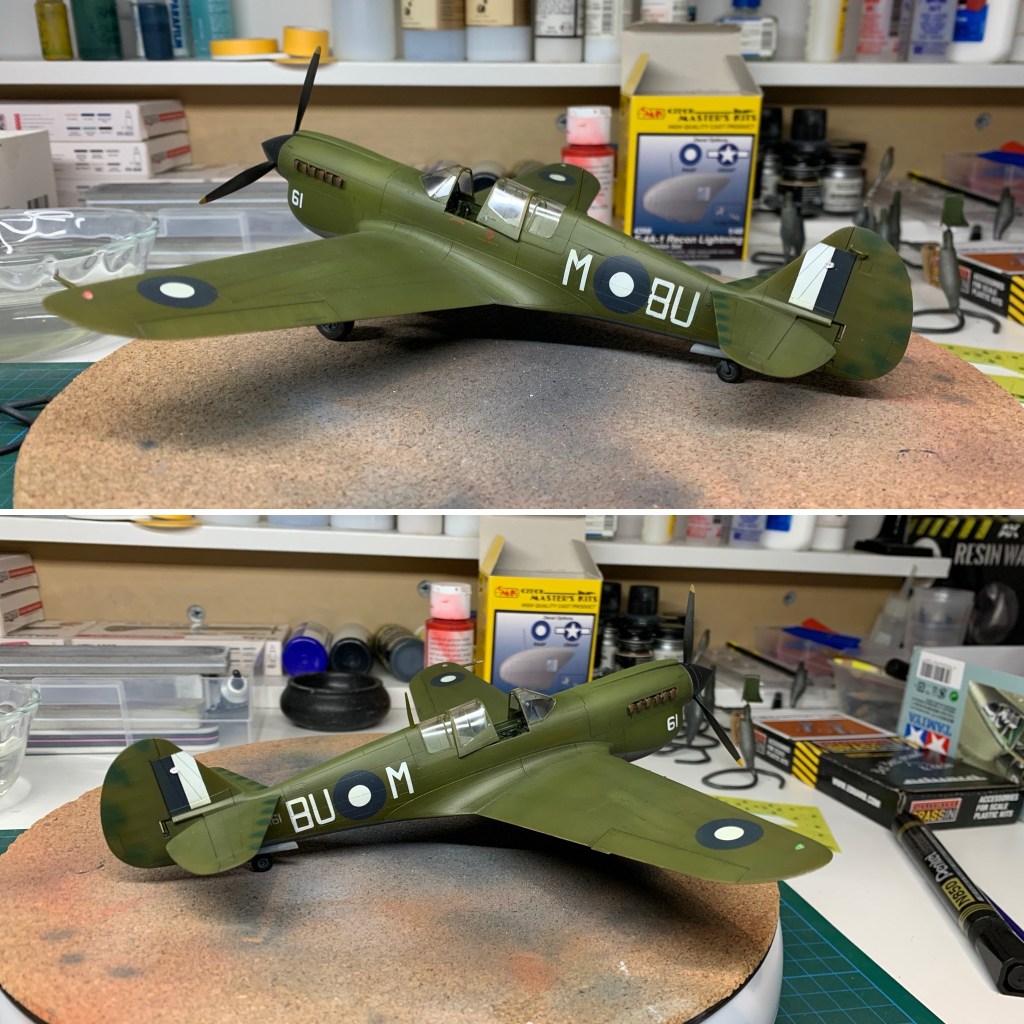
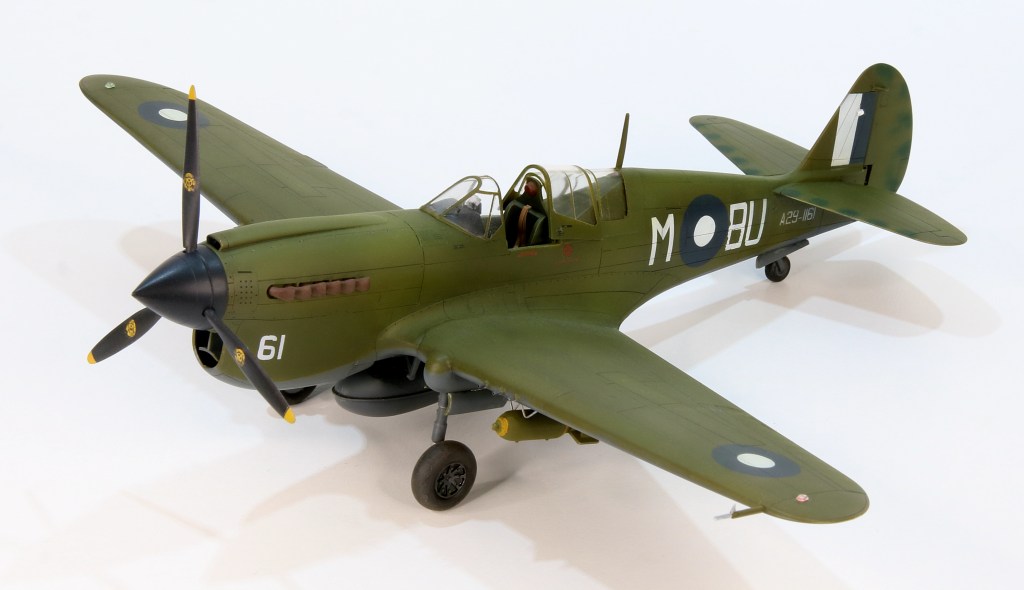
I had some of the information correct; Ted’s aircraft on 9 August was S/N A29-1161 and it was coded “M” but it was not #47 (there’s a clue there…) and it was not “Us Fellers”. Ted’s aircraft was #61 and it did not have any nose art.
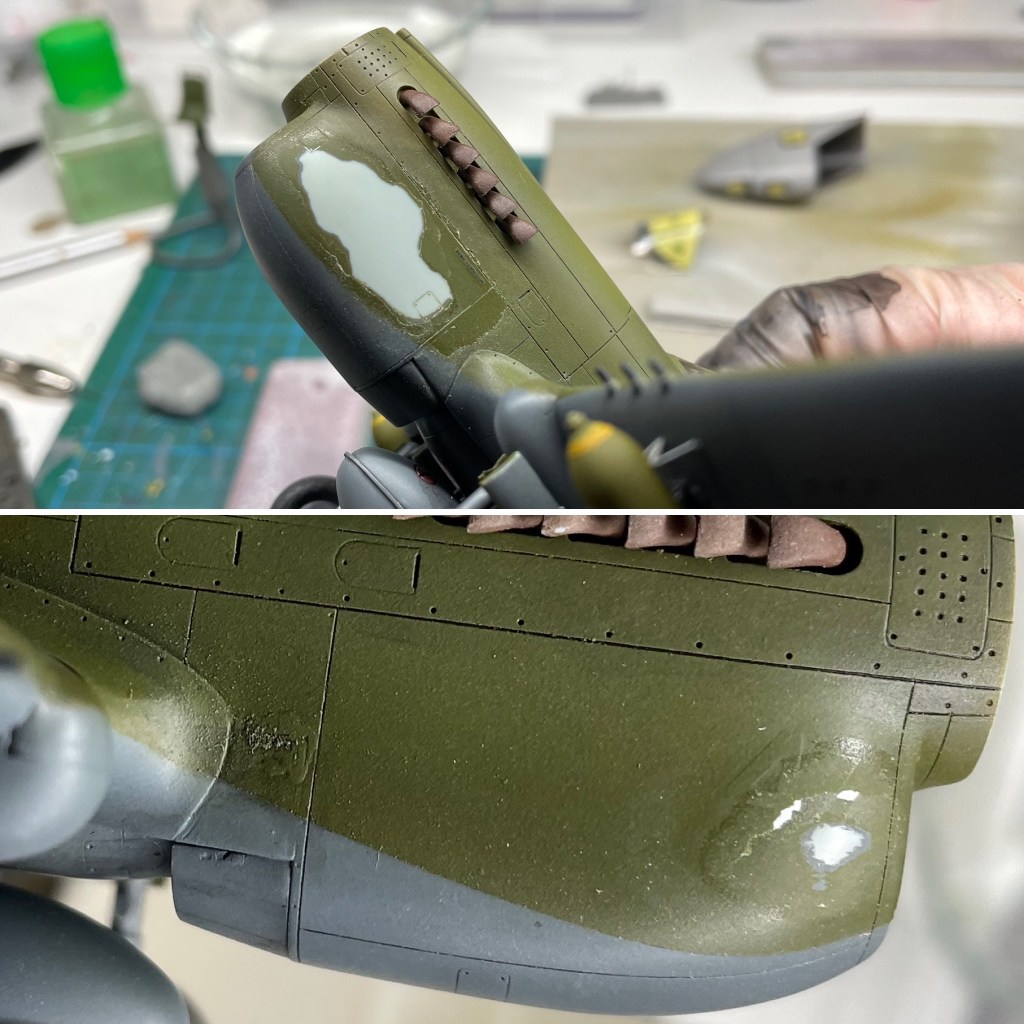
I removed the painstakingly applied and enhanced custom decals and the #47 cowl number, and replaced them with #61 (which is the last two numbers of the S/N – which is how all of the 80 Squadron aircraft were assigned their cowl number).
Click on any of the images below to scroll through the gallery.
Summary of model project
There’s something of an irony in how I made such a simple kit and project so complex and fraught with corrections and do-overs. The final result isn’t bad but a close look reveals the scars of the rework on the codes (at some point the paint chipped on the port fuselage codes, I chose to leave it as weathering), the replacement cowl number and the application and subsequent removal of the nose art. It is what it is.
Gallery







References and Sources
My primary sources for Ted Quinn’s biography and 80 Squadron’s history are as follws:
- https://vwma.org.au/explore/people/510463
- https://www.saam.org.au/aviator_profiles/SAAM%20Biography%20-%20QUINN%20Eldred%20(Ted).pdf
- https://en.wikipedia.org/wiki/No._80_Squadron_RAAF
In building Ted’s Kittyhawk I am indebted to username ozhawk40 at Britmodeller for his crucial last minute information on the aircraft Ted was flying that day, as well as some general information on the squadron.
- http://www.adf-serials.com.au/2a29f.htm
- http://p40hawksnest.com/Service/RAAF/80SqnRAAF/80SqnRAAF.html
- https://www.awm.gov.au/collection/C960780
- https://regimental-books.com.au/product/it-had-to-b_u_-the-life-story-of-80-squadron-r_a_a_f-kitty-hawks-in-the-s_w_p_a_/
If you are interested in following the build as it unfolded, as well as the research that led to the choice of markings, the full build diary is logged in the Britmodeller Aircraft WIP Section.
I really hope you enjoyed this article!
Making-History is a labour of love for me, but it’s becoming more expensive and time consuming. I’m loath to put advertising on it, so if you feel inclined please consider making a donation to help cover site hosting costs as well as the time it takes to produce its content. All donations get a receipt with my thanks.
Mark.
Make a one-time donation
Make a monthly donation
Make a yearly donation
Choose an amount
Or enter a custom amount
Your contribution is very much appreciated and 100% of it will be recycled back into Making-History.
Your contribution is appreciated.
Your contribution is appreciated.
DonateDonate monthlyDonate yearlyCopyright ©2025
This article, its text, and photos of the model is my original work and is protected by copyright in its entirety, except where noted. All research sources are listed in the References and Sources section above, including photos from official sources. All other images and quoted content were sourced from the internet and are used here under protection of fair-use. Any copyrighted content inadvertently posted will be happily removed and/or credited forthwith upon request by its rightful owner.



 Making-History
Leave a reply to bungeegerard Cancel reply